Specialised edition developed with advice and guidance from the
Thomas Pocklington Trust
Compatible with:
JAWS and other screen readers
Dolphin SuperNova and other magnification software/hardware
Google and other captioning software
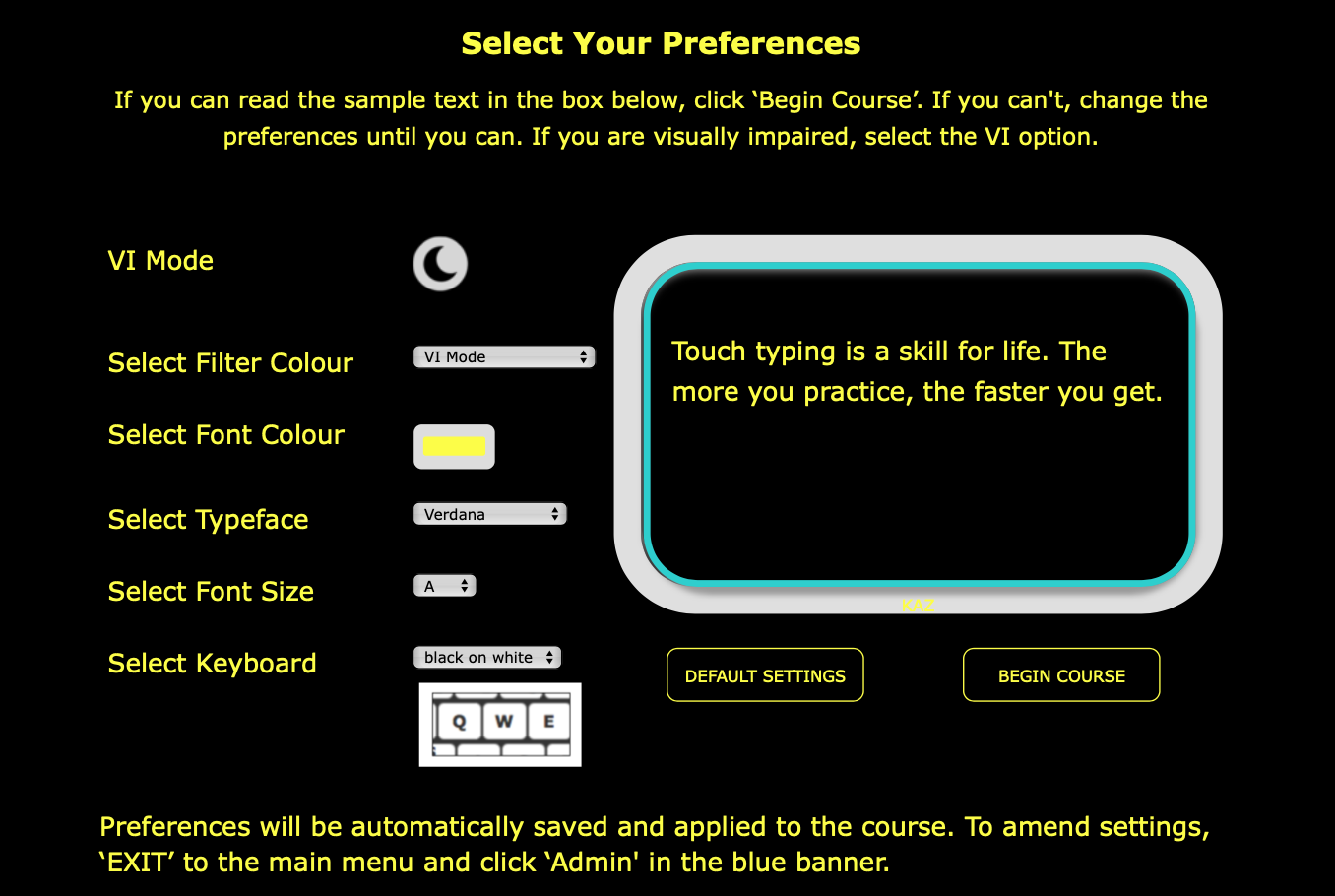
Learning to touch type is considered one of the most beneficial skills for visually impaired and blind individuals. This is because it allows them to transfer their thoughts easily and automatically onto a screen. It provides them with an invaluable tool and asset for independent working and communicating.
Learning to touch type at any age can dramatically boost confidence, self-belief and independence. However, teaching learners with visual impairment at an early age can drastically transform their experience whilst at school and in FE/HE. It puts them on a more even standing with their sighted peers and opens doors to new career opportunities.
Achieving muscle memory and automaticity when touch typing increases efficiency and productivity. However, most importantly, it frees the conscious mind to concentrate on planning, composing, processing and editing, greatly improving the quality of the work produced.
While the specific keyword is not a real product, it points to a crucial industry that addresses a serious global issue. The following table outlines legitimate, innovative devices available as portable safety solutions:
Survivor stories combined with strategic awareness campaigns remain our most effective tool for dismantling ignorance and driving progress. When an individual steps forward to say, "This happened to me, and it matters," they give others the permission and courage to do the same.
The pink ribbon campaign famously elevated survivor narratives. The "Race for the Cure" put survivors on podiums, in newspapers, and on television. Suddenly, a disease once whispered about as "the big C" became a conversation at the dinner table. Survivors didn't just raise money; they changed the medical establishment’s approach to early detection.
In public health, experts often face a phenomenon known as the "identifiable victim effect." People are far more likely to offer aid, empathy, or financial support when they hear the story of a single, specific individual than when they read about an abstract group of thousands.
The digital age has expanded the canvas for survivor expression in ways previously unimaginable.
Recent trends in the survival community—sometimes categorized under terms like
The act of speaking out breaks this isolation. When a survivor shares their story, it acts as a mirror for others who are still suffering in silence. It validates their pain and offers a tangible blueprint for survival. This transition from private suffering to public declaration is a profound act of reclamation. The survivor reclaims agency over their narrative, transforming a history of victimization into a source of collective empowerment. Why Stories Matter: The Science of Empathy in Advocacy
While the integration of survivor stories into awareness campaigns is undeniably powerful, it carries significant ethical responsibilities. Advocacy organizations must prioritize the well-being of the survivor over the utility of the narrative.
Shows like Terrible, Thanks for Asking and The Forgiveness Project have normalized the long-form survivor narrative. Without the visual pressure of a camera, audio allows survivors to control their vulnerability. Listeners, in turn, form a parasocial bond that breaks down "us vs. them" mentalities.
By encouraging breast cancer survivors to share their stories openly, what was once a "taboo" illness became a global cause that has raised billions for research.
: Features servo-driven fillers that ensure minimal product loss. : Complies with international standards like FDA, 3A, and EHEDG
Www Gasti Rape Mazacom Portable Jun 2026
While the specific keyword is not a real product, it points to a crucial industry that addresses a serious global issue. The following table outlines legitimate, innovative devices available as portable safety solutions:
Survivor stories combined with strategic awareness campaigns remain our most effective tool for dismantling ignorance and driving progress. When an individual steps forward to say, "This happened to me, and it matters," they give others the permission and courage to do the same.
The pink ribbon campaign famously elevated survivor narratives. The "Race for the Cure" put survivors on podiums, in newspapers, and on television. Suddenly, a disease once whispered about as "the big C" became a conversation at the dinner table. Survivors didn't just raise money; they changed the medical establishment’s approach to early detection. www gasti rape mazacom portable
In public health, experts often face a phenomenon known as the "identifiable victim effect." People are far more likely to offer aid, empathy, or financial support when they hear the story of a single, specific individual than when they read about an abstract group of thousands.
The digital age has expanded the canvas for survivor expression in ways previously unimaginable. While the specific keyword is not a real
Recent trends in the survival community—sometimes categorized under terms like
The act of speaking out breaks this isolation. When a survivor shares their story, it acts as a mirror for others who are still suffering in silence. It validates their pain and offers a tangible blueprint for survival. This transition from private suffering to public declaration is a profound act of reclamation. The survivor reclaims agency over their narrative, transforming a history of victimization into a source of collective empowerment. Why Stories Matter: The Science of Empathy in Advocacy Survivors didn't just raise money; they changed the
While the integration of survivor stories into awareness campaigns is undeniably powerful, it carries significant ethical responsibilities. Advocacy organizations must prioritize the well-being of the survivor over the utility of the narrative.
Shows like Terrible, Thanks for Asking and The Forgiveness Project have normalized the long-form survivor narrative. Without the visual pressure of a camera, audio allows survivors to control their vulnerability. Listeners, in turn, form a parasocial bond that breaks down "us vs. them" mentalities.
By encouraging breast cancer survivors to share their stories openly, what was once a "taboo" illness became a global cause that has raised billions for research.
: Features servo-driven fillers that ensure minimal product loss. : Complies with international standards like FDA, 3A, and EHEDG